Understanding our internal clock to improve health
Why circadian timing matters for health and disease
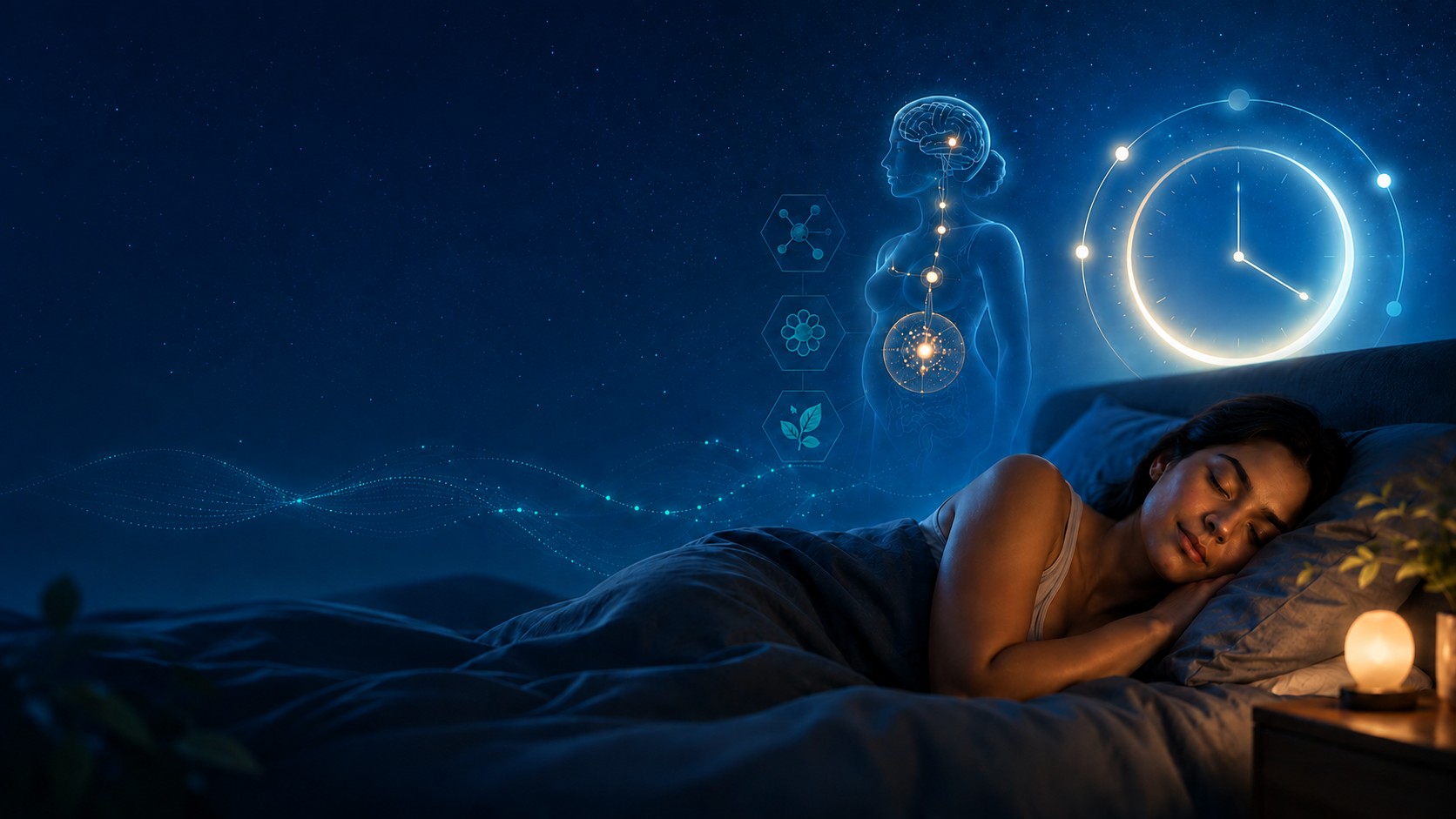
Our internal clock governs fundamental physiological processes throughout the body. When this temporal orchestration is disrupted, disease can arise long before symptoms become apparent. This challenge, however, presents a transformative opportunity: understanding the mechanisms of circadian timing can redefine how we prevent, diagnose, and treat illness.
Our consortium envisions circadian biology as a unifying framework for future medicine. We aim to reveal how disrupted timing drives disease, and to develop strategies to measure ("Detecting"), restore ("Targeting"), and therapeutically harness ("Exploiting") the circadian clock. Through this work, we seek to pave the way toward a future in which medicine is predictive, personalized, and precisely aligned with the body’s endogenous rhythms.
The voices of TRR 418

We are excited to explore the potential of circadian medicine to reshape how health is approached. Our vision is to align medical strategies with the body’s internal clock.
Achim Kramer
Spokesperson

We rely on a solid scientific foundation to understand how timing affects physiology and disease. Together, we uncover mechanisms that guide precise, evidence-based interventions.
Henrik Oster
Deputy Spokesperson

We see daily how disrupted rhythms influence patient recovery and well-being. By addressing and restoring these patterns, we aim to improve care and outcomes.
Claudia Spies
Deputy Spokesperson
Our projects
Our projects translate the principles of circadian medicine into focused research questions. Each project addresses a specific biological system, disease context, or methodological challenge, while contributing to a shared, transdisciplinary effort. Together, they connect mechanistic insight, clinical investigation, and data-driven approaches to advance circadian diagnostics, interventions, and therapies. Explore the projects to see how circadian medicine is studied in practice.
B02
Circadian desynchronization and epigenetic alteration crosstalk on the development and resolution of metabolic dysfunction-associated steatohepatitis
Circadian desynchronization and epigenetic alteration crosstalk on the development and resolution of metabolic dysfunction-associated steatohepatitis
C01
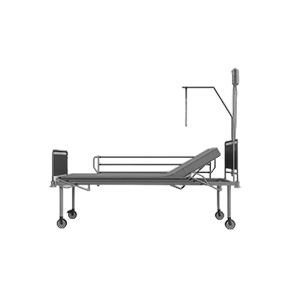
Individualized data-driven light intervention in intensive care unit patients
Individualized data-driven light intervention in intensive care unit patients

C03
Leveraging estimates of circadian disruption to support mental health and well-being
Leveraging estimates of circadian disruption to support mental health and well-being
The publications of TRR 418
The publications of TRR 418 present the scientific foundations of the consortium’s work in circadian medicine. They provide detailed insight into experimental, clinical, and data-driven studies that underpin advances in understanding circadian timing in health and disease. Explore our publications to engage with the evidence, methods, and scientific reasoning behind this research.
HairTime: A noninvasive assay for estimating circadian phase from a single hair sample
March 25, 2026
•
Proc Natl Acad Sci USA
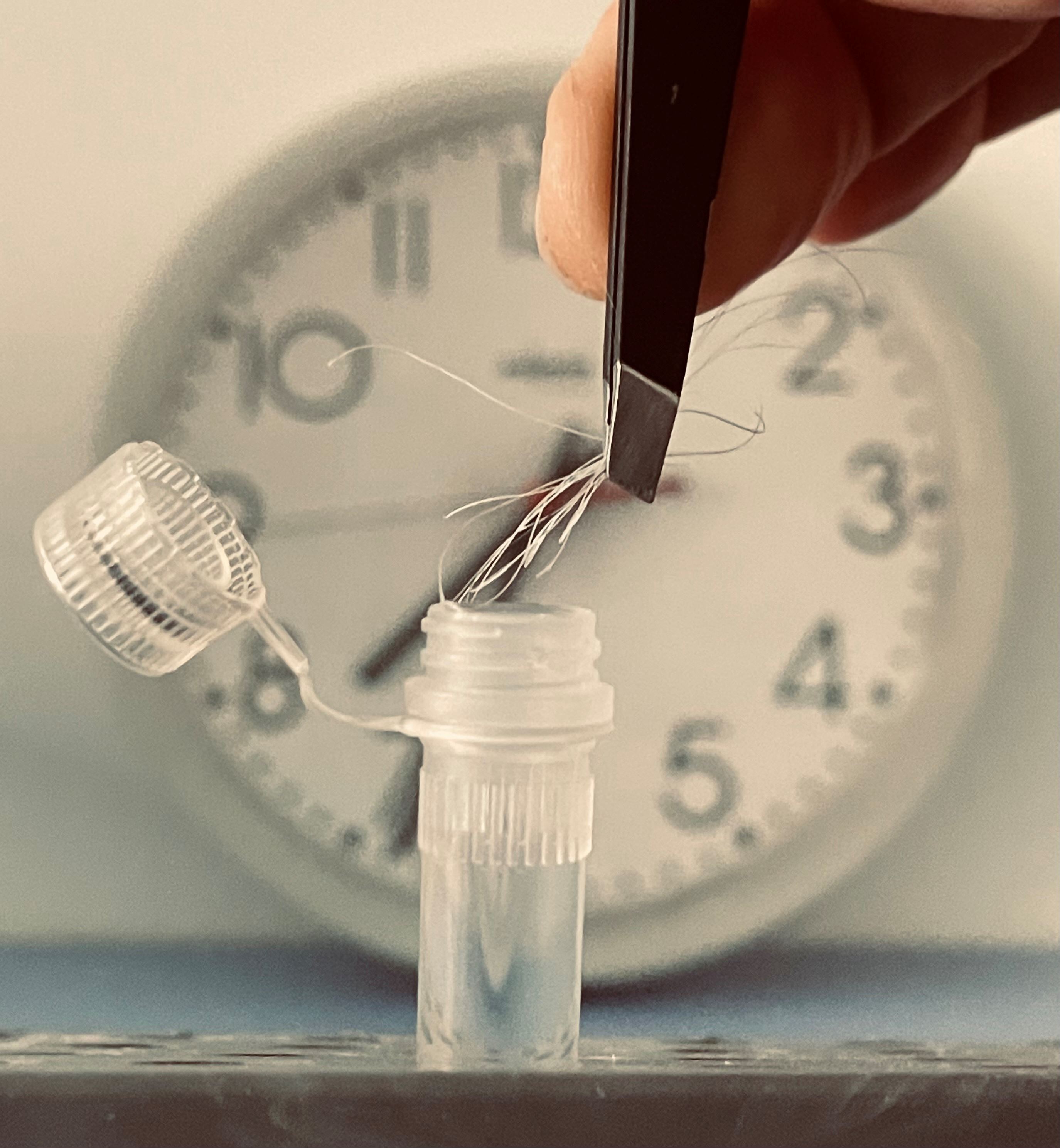
Circadian clocks govern daily physiological and behavioral processes and are crucial for health; disruptions can lead to various diseases. The circadian phase of entrainment—the phase of the internal circadian clock in relation to external environmental cycles—is influenced by both genetic and environmental factors, varies between individuals, and is reflected in daily behaviors such as sleep–wake patterns, cognitive performance, and physical activity. While circadian phase may also fluctuate within individuals, the dynamics and extent of such variation in daily life remain largely unexplored. The gold standard for circadian phase assessment, dim-light melatonin onset (DLMO), is impractical for large-scale studies, and blood-based molecular biomarkers, while promising, are limited in feasibility. To address these challenges, we developed HairTime, a noninvasive assay that estimates circadian phase from a single daytime hair sample. Developed and evaluated in two steps—a training and a validation study—HairTime demonstrated strong predictive power compared to DLMO. Suitable for large-scale studies, it was assessed using over 4,000 samples. Circadian phase estimations showed a normal distribution and were associated with age, sex, and notably, work schedules, with earlier timing on workdays, suggesting that societal factors can modulate internal rhythms. Together, these findings establish HairTime as a promising tool for assessing circadian phase in research and lay the foundation for future applications in personalized chronotherapy.
HairTime: A noninvasive assay for estimating circadian phase from a single hair sample
March 25, 2026
•
Proc Natl Acad Sci USA
Circadian clocks govern daily physiological and behavioral processes and are crucial for health; disruptions can lead to various diseases. The circadian phase of entrainment—the phase of the internal circadian clock in relation to external environmental cycles—is influenced by both genetic and environmental factors, varies between individuals, and is reflected in daily behaviors such as sleep–wake patterns, cognitive performance, and physical activity. While circadian phase may also fluctuate within individuals, the dynamics and extent of such variation in daily life remain largely unexplored. The gold standard for circadian phase assessment, dim-light melatonin onset (DLMO), is impractical for large-scale studies, and blood-based molecular biomarkers, while promising, are limited in feasibility. To address these challenges, we developed HairTime, a noninvasive assay that estimates circadian phase from a single daytime hair sample. Developed and evaluated in two steps—a training and a validation study—HairTime demonstrated strong predictive power compared to DLMO. Suitable for large-scale studies, it was assessed using over 4,000 samples. Circadian phase estimations showed a normal distribution and were associated with age, sex, and notably, work schedules, with earlier timing on workdays, suggesting that societal factors can modulate internal rhythms. Together, these findings establish HairTime as a promising tool for assessing circadian phase in research and lay the foundation for future applications in personalized chronotherapy.
Our news and events
.jpg)
.jpeg)